Love and Dating in Iceland
“Hverra manna ert bu?” (Who are your people?)
 In Iceland, when you meet someone you don’t know, one has to ask “Hverra manna ert bu?” (Who are your people?). This is especially true if you are of dating and reproductive age. Icelanders have to be very careful they are not dating a relative. With the small population (320,000 people in the entire nation) and a recorded history of descendants that dates back to the year 925 AD, one could possibly wind up dating a relative by accident. Add to this the lack of immigration and the lack of surnames (in Iceland people take on their father’s last name by adding –son if you are a boy and –dottir if you are a girl) * and you could wind up sleeping with your cousin once removed On a recent trip to Iceland, one of my tour guides, a man in his early 50’s told me that there is an app for dating in Iceland. He said the app was recently developed at the University of Iceland. Young people put their information into their phone, bump the phones to each other, and the information is transferred and analyzed. The results, whether the couple are related or not, are posted quickly. Four generations back is ok, anything closer is considered unacceptable. Check this article out for more information. http://www.thedailybeast.com/articles/2013/04/23/iceland-s-incest-prevention-app-gets-people-to-bump-their-phones-before-bumping-in-bed.html Then I went on another tour with another guide, a much younger man of 31. He told me about another more popular way people in Iceland know if they are related. They use The Islendingabok, a data base that traces back the genealogical information about Iceland’s inhabitants dating back more than 1,200 years. The goal of this database is to trace all known family connections from the time Iceland was settled by Norwegian Vikings and a few Irish women between 870 and 930 AD. Access to the Islendigabok is only available to Icelandic citizens and legal residents who have been issued and Icelandic ID number (kennitala). Virtually every Icelander is in the book. All one has to do is put in their names and the database will spit out how related they are to each other. It is estimated that the database is 99.9% accurate, and interestingly it created a few scandals when first revealed. It exposed “rangfeorun,” or the fact that people’s recorded fathers are not always their biological fathers. Aside from looking for potential lovers, Icelanders use the book to see if they are related to famous people in Iceland, such as Bjork or the prime Minister. Check out the information about Islendigabok here: http://www.islendingabok.is/English.jsp The dangers of inbreeding exist, and can get quite extreme over multiple generations. At the root of the problem are recessive genes. While most of the genes that we carry are either beneficial or neutral in character, a handful of genes have the potential to have a serious negative impact on our health. These are known as autosomal recessive disorders, and they include cystic fibrosis, sickle cell anemia, Tay-Sachs disease, albinism, and a variety of other conditions. Generally, these genes remain inactive because they are the recessive form of the gene. Each of our parents only carries one gene that passed it onto us. The other half of the pair came from the other parent, and if it was the dominant (harmless form of the gene) then the trait will not appear. The recessive form, or allele, cannot be expressed in the presence of the dominant gene, and so we end up just being a carrier of these potentially harmful genetic conditions rather than a sufferer. If close relatives were to mate, that recessive gene could be passed on in a double dose and cause abnormalities to appear. The idea of dating a close relative is not just socially unacceptable and somewhat repulsive to most, it also can cause serious health problems for the potential offspring. * Try the Icelandic way of naming using your father’s name! For example, my name is Anita and my father’s name was Calvin. If I were Icelandic, I would be Anita Calvinsdottir and my bothers, Michael and Steven, would be Michael Calvinsson and Steven Calvinsson. (This article is one of a series of articles from my recent trip to Iceland)
 I received a new tree in front of my house in Queen Village at the end of April. There had been a tree there for years, but it died and right around Hurricane Sandy, it was taken down by the city because it was about to be a safety hazard. I applied for a new tree with the program provided by the Pennsylvania Horticultural Society. That process took a few years but finally, on April 26, 2014 my new tree was planted! Every time I look at it I smile. Besides the smile that the tree puts on my face everyday, trees provide us with lots of other benefits.
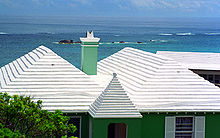 Bermuda is a tiny island nation that lies 640 miles east of North Carolina. When you are in Bermuda you notice its beauty and charm with every house painted a pastel color and roofs a bright white. The pretty and tidy white roofs serve a practical purpose: a way to collect rainwater. There are no rivers or sources of fresh water in Bermuda. All water must be captured off the terraced roofs and directed into storage takes. By law, every house in Bermuda must capture at least 80% of the rainwater that falls on it. The white roofs are made of rectangular slabs of local limestone mortared together in a stepped shape over a hip roof frame. A hip roof is a simple roof which slopes downward at all points and has a uniform angle of pitch. Mortar is applied to the top and edges of the slabs, filling in the joints. The lower edges of the roof then gets sculpted into a long concrete trough for a gutter which directs rain water to a pipe and funnels it into a cistern buried alongside the house. Then a thin wash of cement is applied. To keep the rainwater as clean as possible, the final step is to paint the roof with a special non-toxic paint that must be reapplies every two to three years. The roofs serve another purpose as well. The design provides protection from frequent gale-force winds. These roofs are strong and almost self-supporting with the ability to withstand strong wind. The Bermudian roof is the best and cheapest way to supply fresh water and protection against the wind to the 60,000-plus residents of this tiny island nation.
 With the 2014 Flower Show in full swing this week, one has to think about the impact such a show has on the environment. What is being done to reduce the show’s environmental impact? According to the press packet provided by the Pennsylvania Horticultural Society (the show’s sponsor) a lot of things! Here are just a few: PHS is working with Green Mountain Energy to track data and offset the carbon dioxide and other green house gasses created by the Flower Show. After the show, Green Mountain will use collected data to purchase third-party verified carbon offsets to help balance out the event’s footprint.
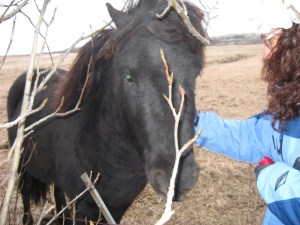
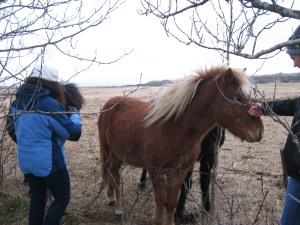 Like most things in Iceland, the Icelandic horse has a history based on the remoteness and isolation of Iceland and the impact of settlement between 874 AD and 935 AD. When Equus ferus caballus was brought over from Scandinavia over 1000 years ago, the Vikings brought over only the best of the best horses to Iceland. Over the years, by selective breeding and natural selection, the horse has become sturdy and capable of withstanding the harsh Icelandic weather. Selective breeding is the process of breeding plants and animals for particular genetic traits. Animals brought to Iceland that were able to withstand the climate were bred with other animals with similar traits. Over many years the traits that allowed the horses to live in harsh conditions were the one that thrived. No other kind of horse has been allowed in Iceland for over 800 years so the breed is quite pure, and has a low prevalence of disease. They also have little immunity to disease. No livestock of any species can be imported to Iceland so as not to infect the horse. All equipment taken into the country for use by horses is fully disinfected. Icelandic horses can be exported but no Icelandic horse can be returned after it has left. The Icelandic Horse looks more like a pony, but most registries classify it a horse. There is actually no word in Icelandic for pony, so maybe this is why it is referred to as a horse, despite its size. This breed of horse has a double coat for extra warmth in cold temperatures, strong short legs, and full tails and manes with coarse hair. The tail is set low. They have an even disposition. Some people say the horse is more like a large pet because it is friendly, patient, adaptable and is friendly. They seem to like people, and the company of other horses. In fact these horses have more tendency to become grumpy if they are alone. For a simple visual explanation of selective breeding go to: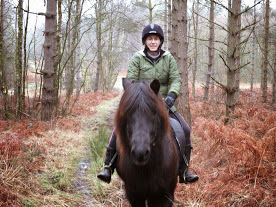
 There will be a screening and panel discussion Thursday March 20 6:30-8:00 pm at City CoHO Philly Nexus, 2401 Walnut Street, about what you can do to promote the green storm water infrastructure movement in Philadelphia. All are invited to a screening of Green City Clean Waters. Green City Clean Waters is a documentary examining Philadelphia’s plan to transform the city into an oasis of green roof, treescapes, rain gardens, and porous pavements to make the city more livable and prettier with higher property values and better community health.
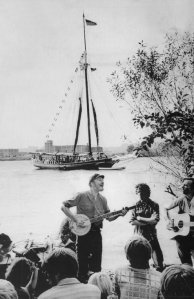 Pete Seeger died on Monday Jan. 27, 2014 in New York City at the age of 94. He celebrated every liberal cause imaginable but one that is close to our hearts was his involvement with the Clean Water Act. Science Is My Specialty would like to acknowledge his help in passing the Clean Water Act and recognize his dedication to cleaning up the Hudson River. Seeger and his wife Toshi bought a 106-foot wooden sloop and began gathering allies to do something about the deplorable condition of the Hudson River. Seeger was appalled to find out, in the spring of 1969, that the river had bacterial concentrations 170 time safe levels. Seeger and his friends decided to play concerts along the river and raised money for the cleanup by passing banjo cases around to the audiences that gathered. A few years after buying his boat The Clearwater, Pete Seeger helped pass the federal Clean Water Act in 1972 by sailing it to Washington D.C. and performing a concert in the halls of Congress. During the next three decades Pete Seeger continued to fight for the cleanup of PCBs and other pollutants in the river. The boat later turned into an environmental organization that remains active today. To find out more about the Clearwater check out:
  2014 Spring into Science Education
 Science is My Specialty
You must be logged in to post a comment.