Join us for an Orientation Session
Temple University: Tuttleman Learning Center- 12th and Montgomery Ave.
4:30pm to 6:30 pm
March 28th, April 3rd, April 5th, April 11th, April 16th,
April 17th, April 25th, May 1st, May 3rd and May 8th
Limited Space per session: You must register to attend
To register for an Orientation:
Contact Chris Sadjian-Peacock, Project Coordinator 215-204-0557 or at csadjpea@temple.edu * To be eligible for candidacy you must have taught at least three years as a fully certified teacher, librarian or counselor. Eligibility for scholarships requires that you attend a NBPTS orientation in 2012. The National Board Certification process is a voluntary, enriching, and rigorous professional growth experience that require teachers to show evidence of the mastery and integration of both content and pedagogical knowledge. It is the highest certification in the education profession. There are now more than 97,000 National Board Certified Teachers nationwide including 904 in Pennsylvania. From its inception in 1987, the National Board for Professional Teaching Standards (NBPTS) mission is to advance the quality of teaching and learning. Should you decide to pursue National Board Certification, your success will place you among teachers and counselors who are recognized as accomplished teachers and serve in leadership roles throughout the profession. The NBPTS tuition is $2565. Scholarships of $1250 will be available to all eligible candidates* through Federal Grants (pending funding approval). Additional Scholarships of up to an additional $1250 are available to teachers in high need districts through an application process based on criteria established by the funding sources. The Orientation Session will include information on the following:
- Eligibility criteria for certification and scholarship
- Requirements of the Certification process
- Available Candidate Supports provided by Temple University’s Center for Teaching Excellence
- Application Process
Are you ready to take your teaching to the next level? Interested in becoming a National Board Certified Teacher (NBCT)? The National Board Certification process is a voluntary, enriching, and rigorous professional growth experience that require the mastery and integration of both content and pedagogical knowledge. There are now nearly 97,000 NBCTs nationwide. From its inception in 1987, the National Board for Professional Teaching Standards’ mission is to advance the quality of teaching and learning. Should you decide to pursue National Board certification, your success will place you among teachers and counselors who serve in leadership roles throughout the profession. The process of becoming a NBCT involves an extensive series of performance-based assessments that include teaching portfolios, student work samples, videotapes, and thorough analyses of your classroom teaching and student learning. Some teachers and counselors finish the program in a year while some take up to three years to complete all aspects of the process. Before you make your Decision Visit the National Board Web Site (www.nbpts.org) to gain a greater understanding of how you can become a NBCT and add this certification to your professional credentials. Review the material under the “Become a Candidate” tab: “Assessments at a Glance” for your certification area. For more details go to the “For Candidates” tab: The Portfolio. Download the appropriate portfolio, look at each of the four entries and find the “What I Need to Do” heading to see the exact requirements. Verify your eligibility for candidacy and choose the certification and developmental level that best reflects your teaching assignment. Please Note: The average time for initial portfolio completion is 200-400 hours outside the classroom. Financial Scholarships: National Board Tuition is $2565. You must participate in an orientation in 2012 to be eligible for financial scholarships: Pending funding, scholarships of $1250 will be available to all eligible candidates* through Federal Grants. Additional scholarships of up to an additional $1250 are available through an application process for teachers in high need districts. Teachers must participate in Temple’s support program to qualify. All Candidates must pay the $65 application fee. * You must have taught three years as a fully certified teacher and currently teach in a Pennsylvania public school **You must say yes to “Release Information” question in order for the Center to be notified to process scholarship Supports for Candidates Temple University is providing a variety of support including graduate credits, skill workshops, work sessions and mentoring by current NBCTs for candidates. You will be notified of all workshops via email. Ninety Act48 credits will be awarded for submission of the completed portfolio and an additional ninety Act48 credits will be awarded upon certification. Timelines for applications March –May 8, 2012: Orientations May 9th: Applications for scholarships due May 18, 2012: Scholarship decisions sent out to candidate May 18- June 1: Teachers apply online at www.nbpts.org to become candidates May 25th-: Support fees and/or tuition due to Temple University June 15th: Scholarship money submitted to NBPTS for those meeting all deadlines Please keep in touch as you go through the process and let us know if you need further assistance. You can reach us by phone at 215 -204-0557, by email at csadjpea@temple.edu or visit the Center’s website, www.temple.edu/education/CTE
CENTER FOR TEACHING EXCELLENCE AT TEMPLE UNIVERSITY

 There are actually more than 365 days in a year! It actually takes 365 days and six hours for the Earth to revolve around the Sun. The extra six hours accumulate into an entire day every four years (6 hours x 4 = 24 hours or one day). A “leap year” will contain the extra 366th calendar day. The extra day is added as February 29, which only exists in a leap year. This year, 2012, is a Leap Year. The term “leap year” comes from the fact that in England, the extra day every 4 years was not recognized by English law and was “leapt over” or ignored.



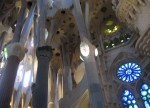
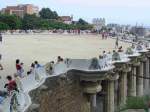
 Steve Jobs, a brilliant man as well, frequently referred to the “intersection of technology and liberal arts”. He saw the relevance of combining technology and science with an understanding of literature, art and design. I understood this intersection more than ever while in Barcelona. Gaudi and Jobs were similar. The architecture of Gaudi around Barcelona immerses visitors in colors, forms, spaces and various artistic techniques he used in his works. Some people looked upon him a madman, while others thought of him as a genius. Same with Jobs. His clean design, along with his concern for packaging, and the look of the inside of the computer (something most of us never see) were things he was concerned about. Some people thought of Jobs as a madman, and others as a genius. It turns out the latter was correct in both cases. If we were to close our eyes and listen to a famous Apple advertisement from 1997 that went along with the “Think Different Campaign”, we could imagine it referring to either Steve Jobs and Apple or Catalonian artist/architect Antoni Gaudi. The ad reads like this: “Here’s to the crazy ones. The misfits. The rebels. The troublemakers. The round pegs in the square holes. The ones who see things differently. They’re not fond of rules. And they have no respect for the status quo. You can quote them, disagree with them, glorify or vilify them. About the only thing you can’t do is ignore them. Because they change things. They push the human race forward. While some may see them as the crazy ones, we see genius. Because the people who are crazy enough to think they can change the world, are the ones who do.” Both Jobs and Gaudi pushed the human race forward: Jobs with the personal computer and Gaudi with his enduring art and architecture that continues to delight the viewer and influenced hundreds artists. It is interesting to note that both men had a reputation for being incredibly expressive and individualistic in their style. They also both had a bad temper at times, but both men were perfect examples of what can happen when science,technology, engineering and math intersect with art and design. What we get is the elegance of Apple products and the beauty of places like Park Güell, Casa Batillo, and Sagrada Familia. *STEM Education: Science, Technology, Engineering, and Math **STEAM Education: Science, Technology, Engineering, Art, and Math Note: Some people call this combination STE2AM (with E2 being Engineering and Entrepreneurship)—Steve Jobs would certainly fit this category.




 Starting Sunday, December 11, and airing through Friday December 16, an entire week of Nature’s most adored and most endangered felines will be featured on Nat Geo Wild. FOR MORE INFORMATION CLICK (or copy into your browser) HERE:
  Science is My Specialty
You must be logged in to post a comment.