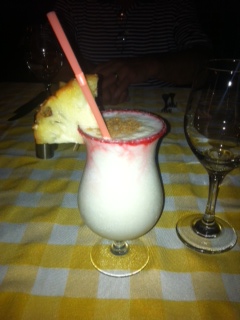
 Rum played an important role in my recent trip to Cuba. First of all it was plentiful. Second, it was unobtainable. Let me explain. Every stop we made, be it a roadside rest stop, restaurant or hotel, we were offered an opportunity have a cocktail made with rum. Our group, twenty-four mostly “young” retired individuals, embraced the rum drinking and truly enjoyed ourselves. But rum was also the “forbidden fruit.” As Americans, we were not allowed to bring rum back into the country. As our Cuban-American tour guide said, “Enjoy your rum in Cuba.” Enjoy we did. I began to ask myself if it was the fun of being on a road trip through Cuba that made the rum taste so good, or was it good because we couldn’t take any home? Or was the rum just better in Cuba? A little research ensued and this is what I discovered: Rum is made from the distillation of sugar cane. The fertile Cuban soil and ideal growing climate make sugar cane truly suitable for growth on the island. The sugar cane first must be pressed to release the juice. Then the sugar cane juice is boiled to become molasses. After that, the molasses, yeast and water are added to start the fermentation* process. Various strains of yeast are used in the making of rum, and yeast can determine the various flavors of rum. The rum is then distilled** and is aged in casks. Cuban law dictates that the rum must be aged for at least 18 months in vats made from American White Oak. This is an amazing feat since there has been a trade embargo with the United States for decades. The climate, soil, ageing and yeast all contribute to the fine taste of the rum but I discovered one more aspect of the fine rum in Cuba. Like most things in the country, Cuban rum production is a state run operation. Going by the name Havana Club, rum production in Cuba is taken very seriously. Havana Club employs Maestro Roneros—master rum makers. From the selection of sugar cane to the final bottling, the master rum makers are responsible for all aspects of the production of rum. They receive about 15 years of training and pass the information down to new maestros through a training program. They apply scientific practices and research to make their rum some of the best in the world. So was the rum better in Cuba? It sure seemed like it was. I believe that in addition to the great soil, perfect climate, trained master rum makers, Cuban rum embodies that Cuban spirit we learned about on our trip: ingenuity, creativity, and holding on to a cultural and historical past while coping and dealing with the present. *The anaerobic (without oxygen) conversion of sugar to carbon dioxide and alcohol by yeast. **The process of purifying a liquid by boiling it and condensing its vapors. This article is one of a series based on my trip to Cuba. I traveled on a People to People tour to Cuba called: Cuba Today, People and Society with Road Scholar. http://www.roadscholar.org/n/program/summary.aspx?id=1%2D5SYY5E
Author Archives: abdupree
Science Is My Specialty Goes to Cuba
I am the self proclaimed Kostas “Gus” Portokalos of the science world. You know Kostas “Gus” Portokalos. He is the father in the 2002 movie, “My Big Fat Greek Wedding.” He related everything to Greek culture and the Greek language. That is what I do with science. I think about the science behind everything I see and do. Since I have been 18 years old I have either been studying science, teaching science, supervising those who teach science, or writing about science. Thinking about the scientific principles behind everything is what I do. So when I went to Cuba last month on a People to People tour with Road Scholar, it seemed normal to me to look at Cuba through the lens of a retired science teacher. I have decided to dedicate the next several postings to things I learned and observed on this trip. For more information on legal travel to Cuba check out: http://www.roadscholar.org/n/program/summary.aspx?id=1%2D5SYY5E
‘Tis The Season
 We all know that Hanukkah, Kwanza, Christmas and New Year are just around the corner, but it’s not those holidays of the season that I am referring to in my title: “Tis The Season. I am referring to the Science Fair Season!
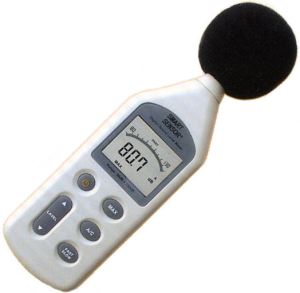
Right here in Philadelphia we have one of the nation’s largest city science fairs, The George Washington Carver Science Fair. http://www.temple.edu/carversciencefair. Applications are due in January. Teachers are always seeking out new ideas for their students for science fair experiments and they are always in need of equipment to do these experiments. With the Science Fair Season upon us, I want to share a few thoughts I have had recently on the subjects of science fair experiments and equipment to do those experiments. While I was preparing the teacher materials for this month’s featured video on EcoExpress, I had an ah ha! moment. (I write the curriculum materials for EcoExpress–ecoexpress.org. This month’s featured video is about Herron Playground in South Philadelphia). In the video the narrator talks about one unexpected positive result of the resurfacing of Herron Playground. She talks about how the neighbors in the South Philadelphia neighborhood are pleased that they no longer hear the sound of the basketballs on the asphalt court. The new porous surface absorbs the sound of the pounding ball. This lead me to think: “How about this as a science experiment: What is the decibel* level of a bouncing basketball on various surfaces?” But, the one thing I heard throughout my 30-year career as a science teacher is that science teachers do not have the equipment to do science experiments. How is a student going measure the decibel level of a bouncing ball if they do not have a decibel meter? After about five minutes of getting ready to discard this idea my iPhone rang. As I stared at my phone to answer it, I saw my apps staring back at me. I see on my phone an app for the weather, and app for the stock market, and app for Happy Hour in Center City. Why not an app for measuring decibel level. I “went” straight to the App Store and found a free app for measuring decibel levels. http://itunes.apple.com/us/app/db-volume-meter/id353432115?mt=8 I googled “scientific apps for iPhone” and found lots of apps that science teachers can use, and many are free. But even if they are not free, the cost rarely exceeds $9.99 (which is pennies compared to purchasing scientific equipment). If you don’t have an iPhone, the person next to you does. Also, there are many apps for the Android phone. The moral of this story is don’t let lack of “expensive equipment’ stop you from involving your students in the Science Fair Season. Check out iPhone and Android apps and you will see that you can do many things with your phone. Just a few years ago this was impossible, but not now. Oh and by the way, HAPPY HOLIDAYS to all! *dec·i·bel a unit used to measure the intensity of a sound.
Leaf Litter and Its Role In Storm Water Management
HOPE ALL OF YOU IN SANDY’S PATH FARED THROUGH THE STORM SAFELY!
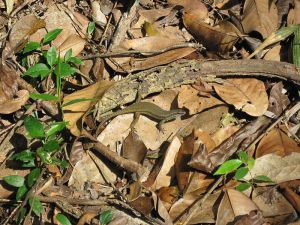 High winds and stormy weather seem like a terrible thing to most of us, but these winds help shed leaves from deciduous trees. These leaves have to be shed. This is a story about the good things that all those leaves do for the environment (especially in wooded areas, forests, parks and even your backyard). In the city those leaves can be a real problem. They clog our drains and make the pavement slippery. But in areas where concrete is NOT the predominant surface, dead leaves are an important part of the ecosystem. Leaves have to be shed from deciduous trees in temperate climates because if they are not, the water in them will freeze and the tree will die as the temperatures drop to below freezing. To learn more about how and why leaves fall, check out my blog from last month called, “When Autumn Leaves Start to Fall.” When leaves, twigs, bark or other dead organic matter falls to the ground it is called leaf litter. The leaf litter plays an important role in the ecology of soil. Leaf litter provides nutrients for microscopic organisms. As the leaf litter decomposes, nutrients are released into the soil. In addition, the leaf litter provides food and shelter for spiders, earthworms, pill bugs, millipeds, eggs and larvae of insects and numerous other organisms. These creatures in turn are the food for toads, frogs, birds and lizards. In addition, leaf litter suppress weeds, reduces the need for fertilizers (the leaves provide nutrients) and irrigation (the leaves hold moisture). Leaf litter has a role in storm water management too. Earthworms and ants that enjoy the leafy environment actually aerate the soil and encourage water to penetrate the soil. Healthy soil that has decomposing leaf litter is soil that absorbs water before it becomes runoff. If runoff occurs, the water often brings with it the pollutants found on land. Water that soaks into the soil finds its way into the water table without bringing along pollutants. In a wooded area near a stream, soil that is well aerated will absorb water and this absorption will help stop flooding. High winds help us by getting those leaves down to the ground so they can enrich the soil, provide food for animals, and improve water quality. For more information about the importance of leaf litter and to learn about what trees have to do with stream health visit:
The Stroud Water Research Center,
970 Spencer Road
Avondale, PA 19311
610 268 2153
http://www.stroudcenter.org/lpn/learn/trees2streams.shtm
NO CHILD LEFT INDOORS—WRITING FOR THE COMMON CORE
NO CHILD LEFT INDOORS—WRITING FOR THE COMMON CORE Quick, before the weather turns cold, try to find a moment when you can take your students outside into the schoolyard. Get some clipboards and have them walk around looking for life in the city. Have them write observations and have them practice expressing themselves clearly, describing what they see. Educational studies indicate that children are more likely to engage in a writing exercise when the writing assignment is related to an activity in which they have just participated. You would be surprised to know that even in our worst concrete jungles life abounds. You can find weeds or moss growing through cracks in the pavement. Insects, birds, and squirrels are everywhere and if we ask students to do some observation you will be amazed at the things they observe that they never observed before. The Common Core ELA standards require the fostering of three writing capacities: writing to explain, writing to persuade and writing to convey real or imagined experience. A simple walk around the schoolyard can be the experience needed to get your students’ writing jumpstarted.
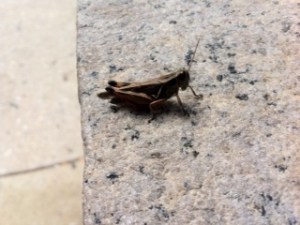 PS I just saw Grasshopper in the City! It excited me to write about it. You could use this as an example of “writing to convey a real or imagined experience.” I was waiting for the 32 bus right outside the Academy of Natural Sciences in Philadelphia (19th and Ben Franklin Parkway) this morning and something caught my eye on a ledge. It was a tiny grasshopper, with one antenna. I was so excited to see it I almost missed my bus. I began wondering if it had escaped from the Academy (they have live animals there and maybe he was destined to be food but he escaped) or if it made the dangerous crossing across traffic from the park like setting. Who says that there is no wildlife in the city? I used my iPhone to capture an image of my new friend and I was compelled to write about the experience. Maybe we can have this same kind of enthusiasm if we ask our students to write about what they see in the schoolyard.
Eco Express at the Math Science Teacher Forum October 1
Welcome back to the new school year. Hope yours is off to a good start. Anita Brook Dupree will demonstrate the use of EcoExpress videos at the MATH + SCIENCE TEACHER FORUM – sponsored by Philadelphia Educational Fund’s Math Science Coalition. The Coalition’s Math and Science Teacher Forum will kick off on Monday, October 1—FREE—dinner at 4:30 followed by announcements and PD sessions. The Forum will be held at the United Way Building, 1709 Ben Franklin Parkway. There is often on-street metered parking in the vicinity of the Parkway, Vine St., between 17th and 18th at that hour and there’s a lot at 17th and Vine that’s reasonable. If you are a middle or high school science teacher you are invited to attend, free of charge. All we ask is that you RSVP by September 28 to Don McKinney dmckinney7@verizon.net
EcoExpress videos tell real stories about environmental challenges in our local community. Ms. Dupree will demonstrate the use of the videos in science class as well as show teachers how the array of videos can be used in language arts and social studies classes. She will demonstrate how the videos are aligned to state standards, and explore the pre and post viewing features available. Several community partners will join Ms. Dupree: Pennsylvania Horticultural Society, Earth Force and Fairmount Water Works Interpretive Center. These partners have worked with EcoExpress and will explain their educational programs to teachers.
PECO Energy Green Roof
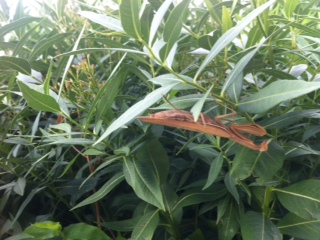
Praying mantis on PECO’s green roof.
How did it get up there?
photo by Nicole Dupree
Adjacent to PECO’s (Philadelphia Electric Company, 2301 Market Street, Philadelphia, PA ) headquarters in downtown Philadelphia is an eight story building that needed a new roof in 2009. PECO executives wanted to replace the roof with something special and energy-saving They looked into installing solar panels on the roof, but found that the surrounding high rises blocked sunlight for much of the day. They decided to replace the 45,000 square foot roof with a roof meadow: an “extensive” area covered with succulent plants that can withstand harsh conditions. These succulents, called sedums, are low growing and create a type of living matt for the roof. In addition to the sedums, there are four large planters with native grasses and other perennials. The Pennsylvania Horticulture Society (PHS) maintains the roof and conducts tours on the third Tuesday of every month, April-October. ($5.00 for PHS members, $10.00 for PHS non members) http://pennsylvaniahorticulturalsociety.org/peco-green-roof/index.html So what is a green roof? A green roof is a roof made of multi layers of drainage systems, growing medium, and plants, on top of a waterproof membrane. Such roofs make buildings more energy efficient. They reduce the impact on the environment. In the case of PECO’s green roof, about 1.6 million gallons of water is kept OUT of the aging sewer system in Philadelphia. Temperatures on the roof in the summer are between 60 and 80 degrees cooler ( average temperature on a Philadelphia roof can be 150 degrees F or higher) 
Pennsylvania Earth Science Teachers Association (PAESTA)

Teachers of science should join a newly formed organization for Earth and Space Science teaching in Pennsylvania. In 2011, the Pennsylvania Earth Science Teachers Association (PAESTA) ( http://www.paesta.psu.edu) was created as a state chapter of the National Earth Science Teachers Association (NESTA), as a non-profit educational organization committed to the advancement, extension, improvement and coordination of Earth and space science education across all levels, from K-16 to informal settings. Currently they are building up their resources and professional development opportunities for members. Membership for 2012-2013 and access to all online materials are FREE. PAESTA welcome advocates for Earth and Space science teaching who are interested in growing PAESTA, especially with their online collection of teaching resources. PAESTA is especially interested in looking for curricular materials, photo collections, and videos relating to Pennsylvania geology. The first annual conference will be held this fall at Penn State Brandywine in Media, PA. On the evening of October 12, PAESTA will be showing the documentary Switch: To A Smarter Energy Future. On Saturday, October 13, PAESTA will have a conference with presentations along the themes of Technology, Fieldwork, Connecting Across Disciplines, Professional Development, and Science Updates (Tectonics, Astronomy, Energy). It is their hope that science teachers would consider joining PAESTA and attending the First Annual Conference at Penn State Brandywine. Below are the links to PAESTA’s membership page and Annual Conference information. If you have any questions or would like additional information about PAESTA, please do not hesitate to contact PAESTA at the addresses below: Membership Page: http://www.paesta.psu.edu PAESTA Conference: http://www.paesta.psu.edu/pennsylvania-earth-science-teachers-association-conference PAESTA Conference Registration: http://www.paesta.psu.edu/form/registration-form-paesta-conference
The Merck Forest and Blueberries in Vermont
 On a recent trip to Vermont Science Is My Specialty went blueberry picking in the Merck Forest and Farmland Center (www.merckforest.org) in Rupert, Vermont. The Merck Forest and Farmland Center is a non-profit environmental organization located in the Taconic Mountains in southwestern Vermont. Admission is free, and the Center is open 7 days a week from dawn to dusk. They offer programs and demonstrations about sustainable agriculture, recreation, habitat preservation, maple sugaring, timber harvests, water control and wildlife management. They also have farm activities including organic gardening, rotational grazing, cover grazing and lucky for me, visitors can pick their own blueberries. I love to pick my own blueberries and that is exactly what I did today!
At first we were afraid that the bushes were picked clean. It was a Monday and the berries are picked by staff to sell at the farmers’ market in town on Sunday morning. But as we walked through the bushes, we decided to use a strategy. We made our way to the back rows, thinking the pickers may not wander down that far. Our strategy worked. We were able to pick two quarts of blueberries.
Blueberries have always been abundant in North America, making them a staple of the diet of Native Americans. They are high in antioxidants, and lots of claims are made about the health benefits of blueberries. They are one of the only natural food that are blue.
Blueberry bushes love acidic soils whose pH is about 4 to 4.5. They like plenty of rain and full sunlight. Most blueberry bushes produce from one to nine pounds of berries per year, but they do not start producing fruit until their third year, and often do not reach full production until the berries are six years old.
I am armed and ready to bring my blueberries (cost: $2.38 for my quart) back to the city and make blueberry muffins and enjoy with vanilla ice cream.
Thank you Merck Forest and Farm Center.
Crickets in Vermont
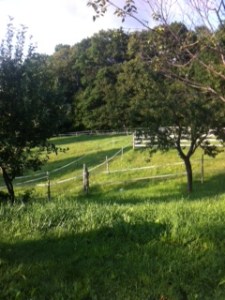 While admiring the view and the peace and quiet of southwest Vermont I began to hear crickets. I remembered learning that you can tell the temperature by counting the cricket chirps in a 15 second interval and add 37. You will get an approximate temperature in Fahrenheit. I decided to do an experiment and test it out. I counted the chirps. I got 34 chirps, and then added 37, which gave me 71 degrees. The temperature on the thermometer said 70, so I was very close. I redid the experiment three times (like every good scientist should) and found my chirp and temperature experiment to be quite accurate. In most cases it is the male that is doing the singing. The male cricket rubs a sharp ridge on its wing against a series of files (think wrinkles) on its other wing. The male cricket may be calling to attract a female or trying to ward off other males. Crickets are part of the family Orthoptera (grasshoppers and katydids). These insects are known for their jumping skills but many are accomplished singers as well.
 Science is My Specialty
You must be logged in to post a comment.